EDIBLE
Made to be eaten
The Food Standards Agency says only glitter or dust clearly labelled 'edible' should go on food to be eaten. It should list its additives by name or E number.
Check a label
 bittybitescake
WHAT THE REGULATORS SAY
EDIBLE says so on the label
Not every glitter on the baking shelf is food.
Lustre dusts, shimmer powders and coloured icing can look the same in the pot. UK and US food regulators say the label tells you which ones can be eaten, which can only touch a cake, and which should stay off it.
Updated
Check a labelTHE SHORT ANSWER
The pots can look alike.
Three label wordings tell them apart.
EDIBLE
The Food Standards Agency says only glitter or dust clearly labelled 'edible' should go on food to be eaten. It should list its additives by name or E number.
Check a labelFOOD CONTACT
Tested 'non-toxic' glitters labelled 'For food contact' may decorate a cake but are not for eating, so they come off before serving.
What to doCOLOURS
Food containing any of six artificial colours must say it 'may have an adverse effect on activity and attention in children'.
See the numbersGeneral information only, not medical advice. For advice about your own health, speak to a doctor, pharmacist or other qualified health professional.
A QUICK LABEL CHECK
Pick the wording on a glitter, dust or colour to see what UK and US food regulators say it means. The bar shows how cautious to be about putting it on food.
Based on Food Standards Agency guidance on edible glitters and food additives, and US FDA advice to bakers. General information, not medical or legal advice.
TWO NUMBERS WORTH KNOWING
One figure on how many colours are approved,
one on how many carry a warning.
41 entries
Colour entries on the FSA's E-number list
The Food Standards Agency's list of approved colours runs from E100 curcumin to E180, including beetroot red (E162), and even aluminium, silver and gold (E173 to E175).
APPROVED COLOURS · FSA
6 colours
Artificial colours that must carry a warning
Sunset yellow (E110), quinoline yellow (E104), carmoisine (E122), allura red (E129), tartrazine (E102) and ponceau 4R (E124) must carry the activity-and-attention warning.
WARNING LABEL · FSA
Since 7 August 2022 titanium dioxide (E171) may no longer be used to manufacture food in Northern Ireland, following an EU regulation. The FSA list for England, Northern Ireland and Wales still includes it, marked as not permitted in Northern Ireland.
FOUR CHECKS BEFORE YOU DECORATE
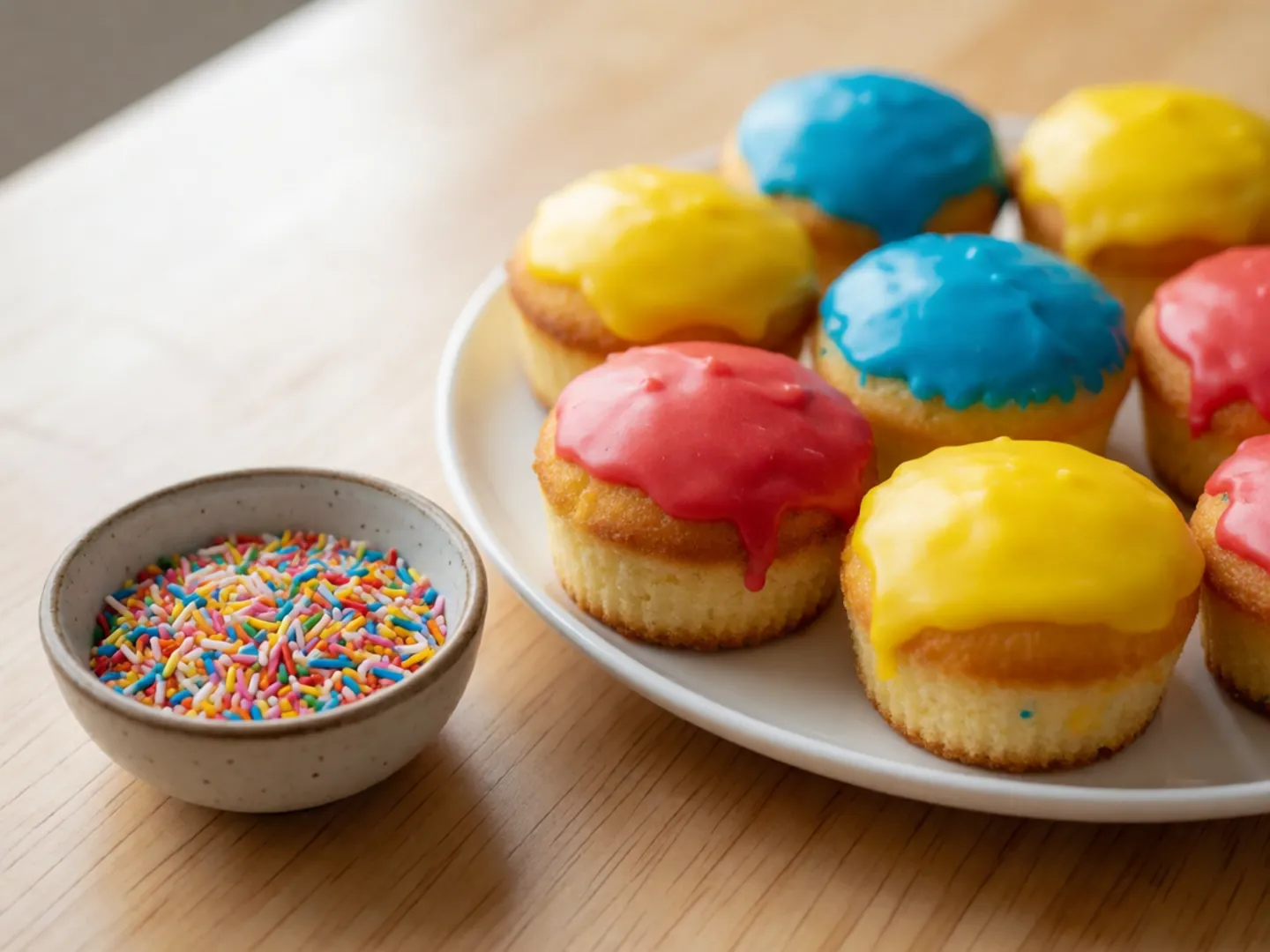
None of these needs special kit. They are about reading the small print on decorations you already have, especially when the cakes are for someone else.
Only glitter or dust clearly labelled edible is meant to be eaten. Most edible products say so on the pot.
Edible decorations must list their additives. No ingredients list is a sign the product is not food.
If you use a decoration that is not edible, the FDA says remove it before the cake is served and eaten.
If a colour carries the activity-and-attention warning, the food it goes in carries that warning too. Selling bakes? Ask your local council what applies.
WHY THE RULES EXIST
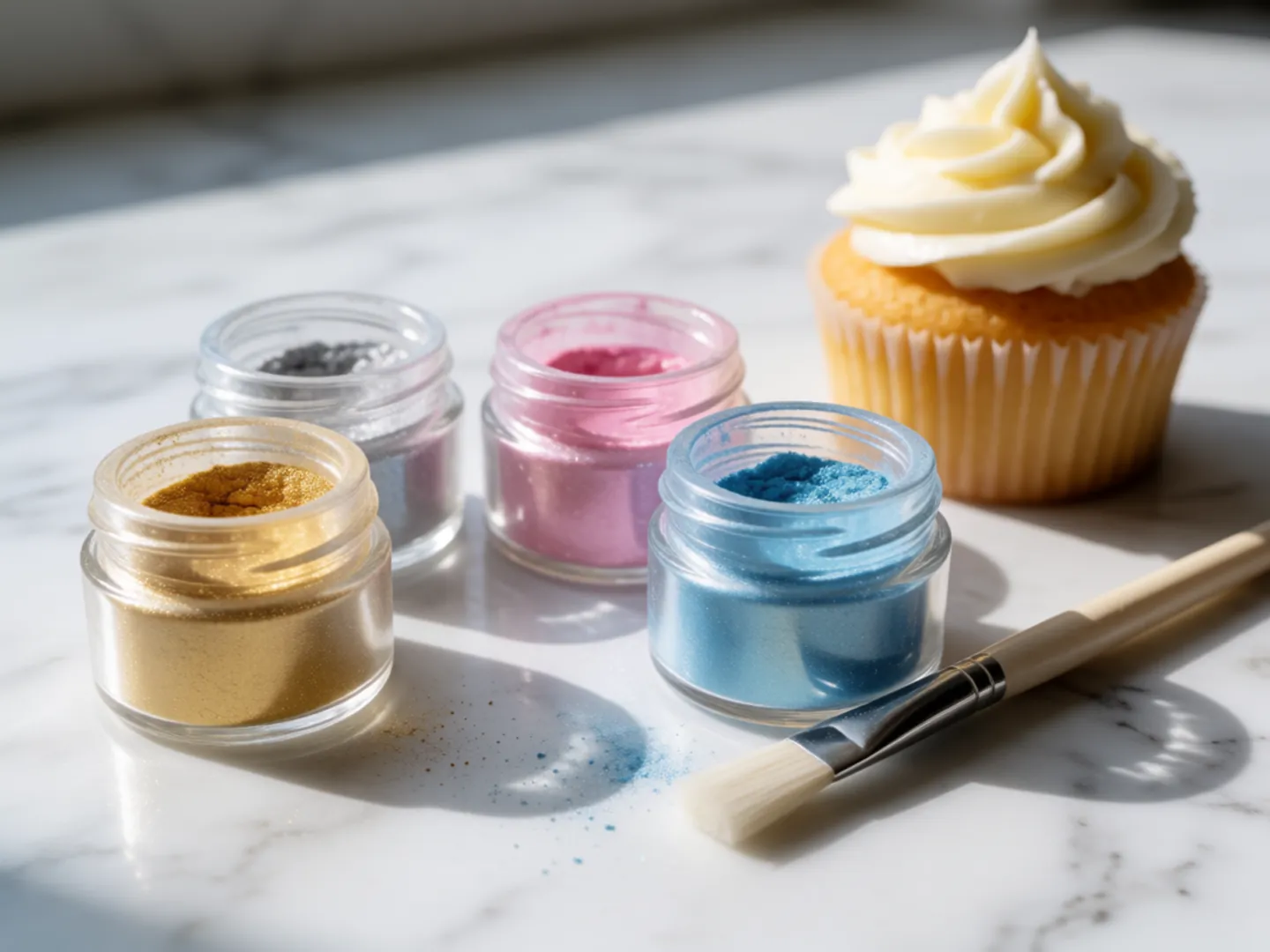
In 2012 the Food Standards Agency said non-edible cake decorating dusts and glitters were being marketed in ways that could be misleading, including products labelled only 'non-toxic' without saying they were not to be eaten.
The US FDA gave similar advice in 2018. It found that some non-edible glitters and dusts were being promoted for cakes, cupcakes and cake pops in online videos, blogs and articles, and asked bakers to check every label.
Questions
No. Non-toxic is not the same as edible. The FSA says only glitter labelled edible should be applied to food for eating, and the FDA says products labelled only non-toxic with no ingredients list should not be used directly on food.
The FSA says edible glitters and dusts are made of permitted additives such as mica and titanium dioxide. The FDA lists sugar, gum arabic, maltodextrin, cornstarch and approved food colours as common ingredients.
It marks a tested glitter that can be used on food as decoration but must not be eaten. Remove it before serving.
Sunset yellow (E110), quinoline yellow (E104), carmoisine (E122), allura red (E129), tartrazine (E102) and ponceau 4R (E124). Food containing them must say they may have an adverse effect on activity and attention in children.
Since August 2022 it may no longer be used to manufacture food in Northern Ireland. The FSA's approved list for England, Northern Ireland and Wales still includes E171, marked as not permitted in Northern Ireland.
Sources
ABOUT THIS NAME
bittybitescake.com is part of the DoodleSale portfolio. It isn't in an auction right now, but you can ask about leasing it.